
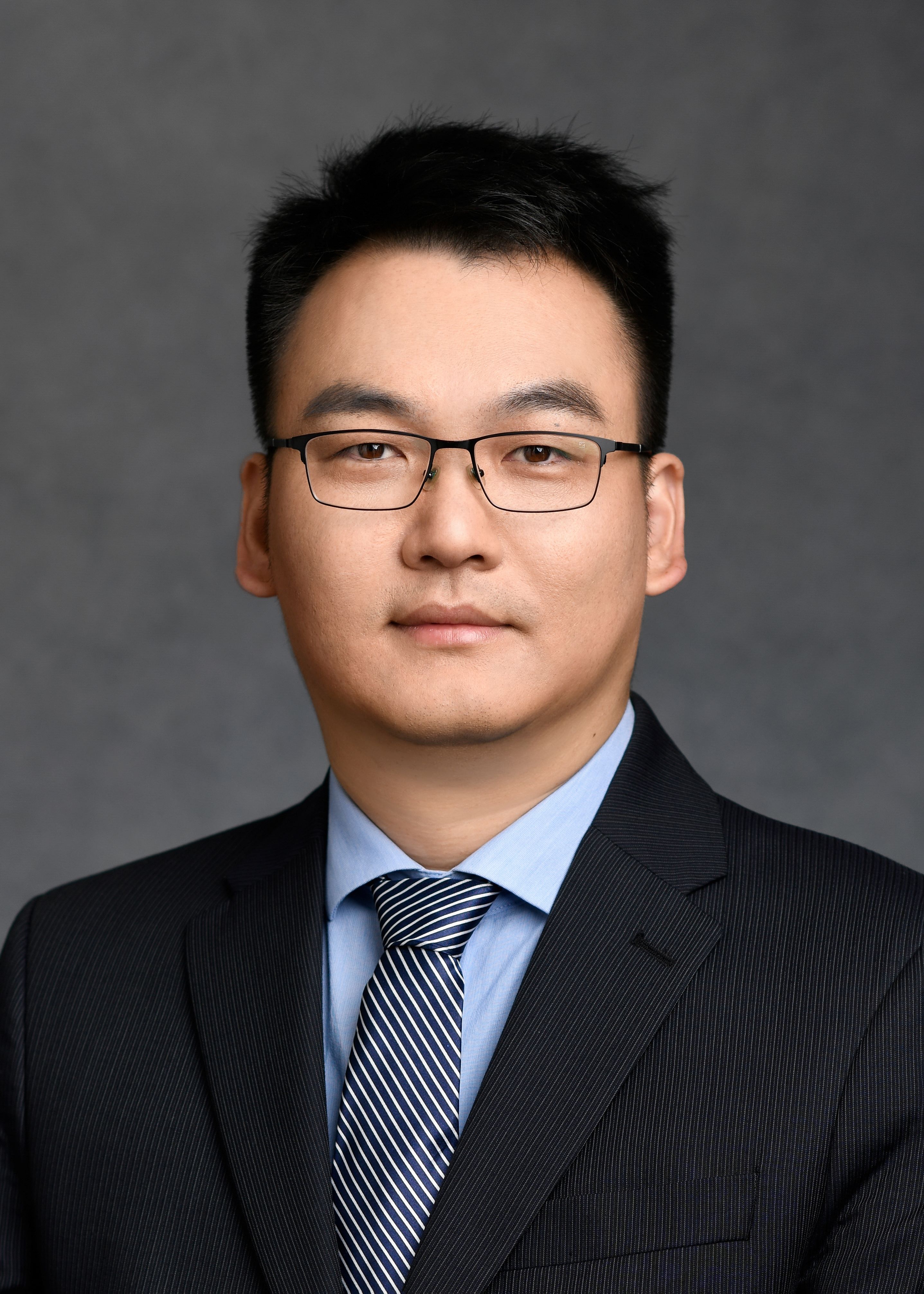
Chong WEI
Associate Professor
Shanghai Advanced Research Institute, CAS
Tel: +86-21-20608103
Email: weic@sari.ac.cn
Mobile/Wechat: +86-17317219129
Address: Build 2, Haike 99, Pudong, Shanghai, China
ZIP: 201210
Research Areas
Dr. Chong Wei earned his bachelor’s degree from Jilin University in 2009 and his PhD from the University of Chinese Academy of Sciences (Institute of Earth Environment, CAS) in 2015. In the same year, he joined the Shanghai Advanced Research Institute (SARI), Chinese Academy of Sciences (CAS). His research focuses on carbon monitoring, accounting, assessment, and mechanisms for pollution reduction and carbon mitigation. He has built and operated a space-ground integrated carbon-emission monitoring system at SARI and conducts research on online/offline monitoring techniques, including satellite/ground remote sensing, in-situ/mobile/drone monitoring, fluorinated gases, carbon-isotope monitoring, and aerosol measurements using the Shanghai Synchrotron Radiation Facility (SSRF). He has led over 30 projects funded by the National Natural Science Foundation of China (NSFC), CAS, the Science and Technology Committee of Shanghai Municipal (STCSM), the Pudong Science and Technology Development Fund, and the Shanghai Environmental Monitoring Center, published over 40 SCI papers, applied for/granted 3 patents, contributed to 2 industry standards, and received an Award for Environmental Protection Science and Technology.
Education
2012-05--2013-01, University of Bern, Visiting student
2009-09--2015-01, University of CAS (Institute of Earth Environment, CAS), PhD student
2005-09--2009-07, Jilin University, Bachelor
Work Experience
2017-11~Now, Associate Professor, Shanghai Advanced Research Institute, CAS
2015-04~2017-11, Assistant Professor, Shanghai Advanced Research Institute, CAS
Publications
Google Scholar: https://scholar.google.com/citations?user=hCCm-rUAAAAJ&hl=en
ResearchGate: https://www.researchgate.net/profile/Chong-Wei-5
ORICD: https://orcid.org/0000-0003-0632-4324
Selected papers
[1] Wei Chong, Historical trend and drivers of China’s CO2 emissions from 2000 to 2020. Environment, Development and Sustainability 2024, 26, 2225-2244.
[2] Wei Chong et al., Occurrence and Discrepancy of Surface and Column Mole Fractions of CO2 and CH4 at a Desert Site in Dunhuang, Western China. Atmosphere 2022, 13, (4), 571.
[3] Wei Chong et al., Polycyclic aromatic compounds (PAHs, oxygenated PAHs, nitrated PAHs and azaarenes) in air from four climate zones of China: occurrence, gas/particle partitioning, and health risks. Science of the Total Environment 2021, 786, 147234.
[4] Wei Chong et al., Temporal characteristics and potential sources of black carbon in megacity Shanghai, China. Journal of Geophysical Research: Atmospheres 2020, 125, e2019JD031827.
[5] Wei Chong et al., Temporal characteristics of greenhouse gases (CO2 and CH4) in the megacity Shanghai, China: Association with air pollutants and meteorological conditions. Atmospheric Research 2020, 235, 104759.
[6] Wei Chong et al., Spatial distribution of greenhouse gases (CO2 and CH4) on expressways in the megacity Shanghai, China. Environmental Science and Pollution Research 2020, 27, 31143–31152.
[7] Wei Chong et al., Occurrence, gas/particle partitioning and carcinogenic risk of polycyclic aromatic hydrocarbons and their oxygen and nitrogen containing derivatives in Xi’an, central China. Science of the Total Environment 2015, 505, 814-822.
[8] Wei Chong et al., Polycyclic aromatic hydrocarbons (PAHs) and their derivatives (alkyl-PAHs, oxygenated-PAHs, nitrated-PAHs and azaarenes) in urban road dusts from Xi’an, Central China. Chemosphere 2015, 134, 512-520.
[9] Xia, Wei, et al., Occurrence and potential sources of greenhouse gases at Wuzhen, a typical ancient water town in Eastern China. Environmental Monitoring and Assessment 2026, 198, 812.
[10] An, Wei, et al., AI agent for carbon emission accounting and uncertainty analysis of Shanghai's electricity consumption. Journal of Cleaner Production 2026, 148689
[11] Shao, Wei, et al., Assessing Biogenic and Biomass Burning Sources in Winter PM2.5 Through Saccharide Characterization in Changzhou, YRD Region, China. Aerosol Science and Engineering, 2026
[12] Zhan, Wei, et al., Seasonal trends and light extinction effects of PM2.5 chemical composition from 2021 to 2022 in a typical industrial city of central China. Atmospheric Environment 2025, 341, 120922.
[13] Zhang, Wei, et al., A 150 years record of polycyclic aromatic compounds in the Sihailongwan Maar Lake, Northeast China: impacts of socio-economic developments and pollution control. Environmental Science: Processes & Impacts 2024, 26, 1748-1759.
[14] Zhang, Wei., Sediment record of polycyclic aromatic compounds and black carbon over the last ~400 years in Sanjiaolongwan Maar Lake, northeast China. Science of the Total Environment 2024, 906, 167438.
[15] Bandowe, Wei, et al., Polycyclic aromatic compounds (PAHs, oxygenated PAHs, nitrated PAHs and azaarenes) in soils from China and their relationship with geographic location, land use and soil carbon fractions. Science of the Total Environment 2019, 690, 1268-1276.
Research Interests
- Space-ground Integrated Carbon Monitoring Technology
- Greenhouse Gas Emissions Accounting Technology
- Mechanism of Coordinated Pollution and Carbon Reduction
Students
Student from UCAS
Saiya An, Master Student, 2025-2028
Visiting Student
Peipei Shao, Master Student, Jiangsu University of Technology, 2025-2027
Suijun Cai, Master Student, Jinan University, 2026-2027
Yujie Gao, Master Student, Jiangsu University of Technology, 2026-2027
Xiaoya Zhou, Master Student, Shanghai Jiaotong University, 2026-2026