
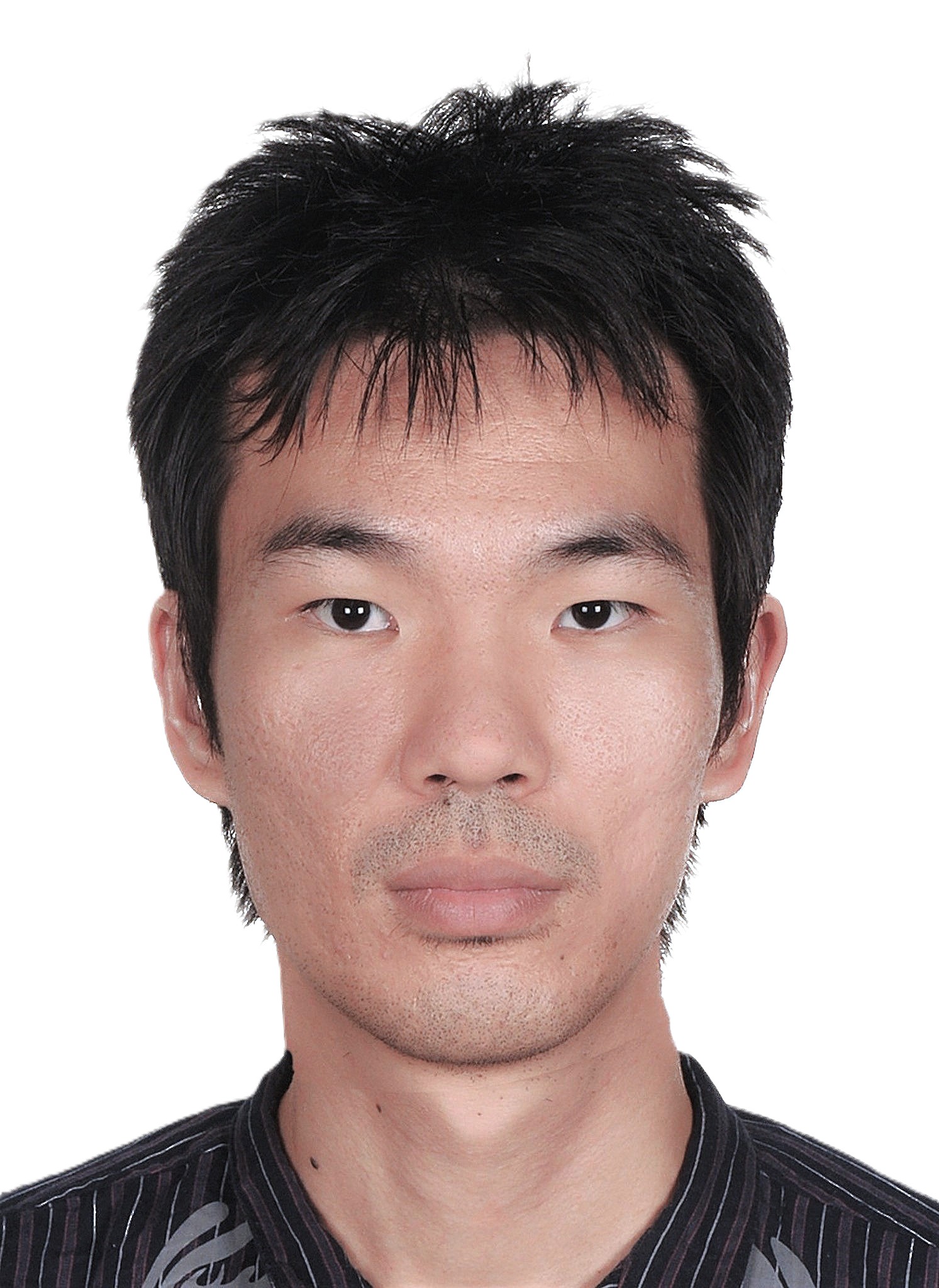
Teoh Jia Jian (JJ)
Institute of High Energy Physics, Chinese Academy of Science
e-mail: teohjiajian@ihep.ac.cn
Address: Room 211, Building 3, 19B Yuquan Road, Shijingshan District, Beijing, China. Postal code: 100049
Research Interests
I am committed to advancing detector hardware innovation and using it as a powerful tool to explore physics beyond the Standard Model (BSM).
Over the past decade and more, I have been deeply involved in the ATLAS experiment at CERN. My contributions range from high-speed data acquisition (DAQ) system architecture design and large-scale production and high-precision quality control of advanced silicon micro-strip detectors, to physics analysis using ATLAS data. These experiences have given me a profound understanding that groundbreaking physics discoveries are often built upon pushing the limits of detector hardware while maintaining strong physics insight.
Our group uniquely integrates cutting-edge hardware development with high-energy physics analysis. The hardware team is currently focused on developing high time-resolution and high spatial-resolution silicon detectors for next-generation collider experiments (such as CEPC and FCC-ee). On the physics analysis side, I lead the team in exploring dark matter searches, precision Higgs boson measurements, and the application of advanced machine learning techniques for complex event reconstruction.
I place strong emphasis on cultivating students’ international perspective and independent research capabilities. Group members will work in a highly international research environment and have the opportunity to directly participate in core R&D for major international projects, including the LHC upgrade and the CEPC. You will collaborate with world-leading physicists, take on challenging sub-tasks in real large-scale scientific projects, and receive systematic training across the full chain from hardware design to physics analysis.
If you are passionate about experimental particle physics and eager to deepen your expertise at the intersection of hardware innovation and new physics discovery, I warmly welcome you to join our team. Together, we will push the boundaries of particle physics.
Main Research Directions
1. Advanced Silicon Detector Development
Full-chain R&D of high-performance silicon micro-strip and pixel detectors for future colliders (CEPC, FCC-ee, etc.) and practical applications. Research topics include detector design and simulation, new materials and sensor process development, large-scale production and quality control, mechanical structure design, cooling systems, beam testing, and system integration. We also explore the application of silicon detector technologies in medical imaging and other fields.
2. High-Speed Data Acquisition and Readout Electronics (DAQ) Systems
Research on large-scale high-speed data acquisition architectures, real-time trigger systems, and high-bandwidth data transmission and processing. Particular focus is placed on next-generation readout electronics, including RISC-V based custom processors, heterogeneous computing architectures, radiation-hardened design, low-power high-bandwidth systems, and other frontier technologies.
3. New Physics Searches and Precision Measurements
Utilizing LHC ATLAS experiment data for dark matter candidate searches, precision measurements of Higgs boson properties, and probes of physics beyond the Standard Model (BSM). Emphasis is placed on developing advanced machine learning methods for complex event reconstruction, particle identification, and background suppression.
Group Highlights: Students in all directions have the opportunity to participate in both hardware development and physics analysis, forming a complete research loop from detector design to final physics results. This integrated approach provides particularly strong and comprehensive training for aspiring experimental particle physicists.
Graduate Admissions
Our group primarily recruits graduate students in Experimental Particle Physics and Nuclear Physics. We welcome highly motivated candidates who are passionate about experimental particle physics, high-energy physics experimental techniques, and detector development.
We particularly encourage applicants with the following undergraduate backgrounds to apply for Master’s programs: Microelectronics Science and Engineering, Electronic Science and Technology, Semiconductor Physics, Physics, and Applied Physics.
We also welcome students from related interdisciplinary fields such as Computer Science, Mechanical Engineering, and Automation/Control Engineering. As long as you have a strong interest in detector hardware or data processing and are willing to commit to the field, we highly encourage you to apply and to contribute your expertise to experimental particle physics and advanced detector research.
For PhD applicants, preference will be given to candidates who already have a solid foundation in experimental particle physics, high-energy physics experimental techniques, or detector development.
Education
2013-04--2017-09 Osaka University Doctoral Degree
2011-04--2013-04 Osaka University Master Degree
2002-05--2007-09 University Technology Malaysia (UTM) Bachelor
Work Experience
2021-07~2025-07, University of Toronto, Canada. Posdoctoral Researcher
2018-03~2021-03, National Institute for Subatomic Physics (Nikhef), The Netherland. Posdoctoral Researcher
Publications
1. ATLAS Collaboration, “Combination and summary of ATLAS dark matter searches interpreted in a 2HDM with a pseudo-scalar mediator using 139fb-1 of √s=13 TeV of pp collision data.” Science Bulletin 69 (2024) 3005, arXiv:2306.00641, DOI: 10.1016/j.scib.2024.06.003
2. ATLAS Collaboration, “Search for resonant production of dark quarks in the dijet final state with the ATLAS detector”, JHEP 02 (2024) 128, arXiv:2311.03944, DOI: 10.1007/JHEP02(2024)128
3. ATLAS Collaboration, “Search for heavy Majorana neutrinos in e±e± and e±μ± final states via WW scattering in pp collisions at √s=13 TeV with the ATLAS detector”, Phys. Lett. B 856 (2024) 138865, arXiv:2403.15016, DOI: 10.1016/j.physletb.2024.138865
4. J. J. Teoh, “Summary of the ATLAS ITk strip tracker module pre-production”, PoS(ICHEP2024)939, DOI: 10.22323/1.476.0939
5. ATLAS Collaboration, “ATLAS flavour-tagging algorithms for the LHC Run 2 pp collision dataset” Eur. Phys. J. C 83 (2023) 681, arXiv:2211.16345 , DOI: 10.1140/epjc/s10052-023-11699-1
6. ATLAS Collaboration, “Search for dark matter in association with a Higgs boson decaying to b-quarks in pp collisions at √s=13TeV with the ATLAS detector”, Phys. Lett. B 765 (2017) 11, arXiv:1609.04572, DOI: 10.1016/j.physletb.2016.11.035
7. ATLAS Collaboration, “Search for dark matter produced in association with a Higgs boson decaying to two bottom quarks in pp collisions at √s= 8 TeV with the ATLAS detector,” Phys. Rev. D93, 072007 (2016), arXiv:1510.06218 DOI:10.1103/PhysRevD.93.072007
8. J. J. Teoh, K. Hanagaki, Y.Ikegami, Y. Takubo, S. Terada and Y. Unno, “Development of readout system for FE-I4 pixel module using SiTCP,” Nucl. Instrum. Meth. A 731, 237 (2013). DOI: 10.1016/j.nima.2013.05.161