
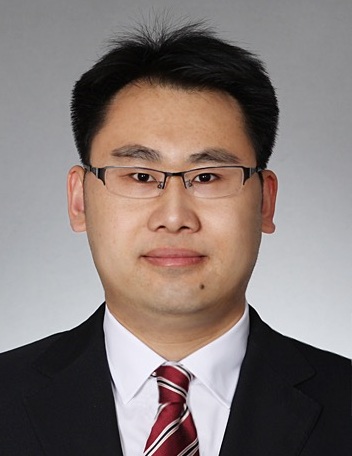
Yanfeng Lu is currently an Associate Professor with the State Key Laboratory of Multimodal Artificial Intelligence Systems, Institute of Automation, Chinese Academy of Sciences, Beijing, China.
My research interests include brain-inspired computing, computer vision, robot vision, and machine learning.
Research Areas
Mainly engaged in:
Research on brain-inspired computing, computer vision, robot multimodal perception, and robot skill learning and development, etc.
Specific research work:
1. brain inspired perceptual cognitive computing, brain like pulse neural networks, etc;
2. research and application of vision detection, recognition and tracking algorithms for robots and UAVs;
3. research on robot skill learning and development based on reinforcement learning and continuous learning;
Education
Korea University, South Korea Ph.D. 2010 – 2015.
Harbin Institute of Technology, China B.S. 2006 – 2010.
Experience
State Key Laboratory of Multimodal Artificial Intelligence Systems, Institute of Automation, Chinese Academy of Sciences Associate Professor 2017- Pres.
Brain Inspired Intelligence Research Center, Institute of Automation, Chinese Academy of Sciences Assistant Professor 2015-2017
Publications
[1]Y. F. Lu, J. W. Gao, et.al, “A Cross-Scale and Illumination Invariance-Based Model for Robust Object Detection in Traffic Surveillance Scenarios,” IEEE Transactions on Intelligent Transportation Systems, 2023. 24(7): 6989-6999.
[2]Y. F. Lu, X. Yang, et.al, “A Novel Biologically-inspired Structural Model for Feature and Correspondence,” IEEE Transactions on Cognitive and Developmental Systems, 2023. 15(2): 844-854.
[3]Y. F. Lu, Q. Yu, et.al, “Cross Stage Partial Connections based Weighted Bi-directional Feature Pyramid and Enhanced Spatial Transformation Network for Robust Object Detection,” Neurocomputing, 2022. 513: 70-82.
[4]Y. F. Lu, W. J. Zhao, “What will the robots be like in the future?” National Science Review, 2019. 6(5): 1059–1061.
[5]L.Y. Guo, Y. F. Lu*, et.al. Transformer-based Spiking Neural Networks for Multimodal Audio-Visual Classification, IEEE Transactions on Cognitive and Developmental Systems, DOI: 10.1109/TCDS.2023.3327081.
[6]Y. Li, Y. F. Lu*, et.al. Insulator defect detection for power grid based on light correction enhancement and YOLOv5 model, Energy Reports, 2022, 13(8): 807-814.
[7]C. Ma, Y. F. Lu*, “Distributed Nonsynchronous Event-triggered State Estimation of Genetic Regulatory Networks with Hidden Markovian Jumping Parameters”, Mathematical Biosciences and Engineering, 2022, 19(12): 13878-13910.
[8] Y. Li, Y. F. Lu*, et.al. "Electromagnetic Force Analysis of a Power Transformer under the Short-Circuit Condition," IEEE Transactions on Applied Superconductivity, 2021, 31(8): 1-3.
[9]Y. F. Lu, H. Z. Zhang, et.al, “Dominant Orientation Patch Matching for HMAX,” Neurocomputing, 2016. 193:155-166.
[10]Y. F. Lu, T. Kang, et.al. “Enhanced hierarchical model of object recognition based on a novel patch selection method in salient regions,” Computer Vision, IET, 2015, 9(5): 663-672.
[11]Y. F. Lu, H. Qiao, et.al, “Image Recommendation based on a Novel Biologically Inspired Hierarchical Model,” Multimedia Tools and Applications, 2018, 77 (4):4323-4337.
[12]Y. F. Lu, L. H. Jia, et.al, “Enhanced Biologically Inspired Model for Image Recognition Based on a Novel Patch Selection Method with Moment,” International Journal on Wavelet, Multiresolution, and Information Processing,2019,17(2), 1940007.
[13]Y. F. Lu, M. Lim, et.al. “Extended Biologically Inspired Model for Object Recognition Based on Oriented Gaussian-Hermite Moment,” Neurocomputing, 2014. 139(2): 189-201.
[14]H. Z. Zhang, Y. F. Lu, et.al, “B-HMAX: A fast Binary Biologically Inspired Model for Object Recognition,” Neurocomputing. 2016. 218: 242-250.
[15]J. Wang, Y. F. Lu*, et al. A novel CNN model for fine-grained classification with large spatial variants, International Conference on Intelligent Computing and Signal Processing, 2020.
[16]Y. F. Lu, H. Qiao, et.al, “A Novel Biologically Inspired Hierarchical Model for Image Recommendation,” 14th International Symposium on Neural Networks, Sapporo, Japan, 2017.
[17]Y. F. Lu, H. Z. Zhang, et.al. “A Novel Patch Selection Method in Salient Regions of Object recognition,” 30th Korean Conference of Institute of Control, Robotics and Systems, Seoul, South Korea, 2015.4.22-4.25.
[18]Y. F. Lu, A. X. Zhang, et.al. “Multi-Scale Scene Text Detection Based on Convolutional Neural Network,” Chinese Automation Congress, 2019.
[19]Y. F. Lu, H. Z. Zhang, et.al. Enhanced Hierarchical Model of Object Recognition Based on Saliency Map and Keypoint. Institute of Control, Robotics and Systems, 2015:53-54.
[20]W. Y. Zhang, Y. F. Lu*, et.al. “Convolutional Neural Networks on Apache Storm,” Chinese Automation Congress, 2019.
[21]B. C. Liu, Y. F. Lu*, et al. Spiking Neuron Networks based Energy-Efficient Object Detection for Mobile Robot, Chinese Automation Congress, 2021.
[22]J. Y. Chang, Y. F. Lu*, et al. Long-distance tiny face detection based on enhanced YOLOv3 for unmanned system,International Conference on Intelligent Unmanned Systems,2020.
[23]Y. Li, Y. F. Lu*, Dynamic Electromagnetic Force Analysis of a Power Transformer with Regulated Windings, IEEE International Conference on Applied Superconductivity and Electromagnetic Devices, 2020.
[24]Z. D. Sun, Y. F. Lu*, Underwater attached organisms intelligent detection based on an enhanced YOLO, IEEE International Conference on Electrical Engineering, Big Data and Algorithms, 2022, 1118-1122.
[25]Z. Y. Li, Y. F. Lu*, et al. Memory Mechanisms Based Few-shot Continual Learning Railway Obstacle Detection, The 5th China Symposium on Cognitive Computing and Hybrid Intelligence, 2023.
[26]D. Y. Lee, Y. F. Lu, et.al. "3-D Vision Based Local Obstacle Avoidance Method for Humanoid Robot," 2012 International Conference on Controls Automation and Systems, Jeju,South Korea, 2012.10.20-10.23.
[27]商迪,吕彦锋*,乔红,“受人脑中记忆机制启发的增量目标检测方法”,计算机科学,2023, 50 (2): 267-274.