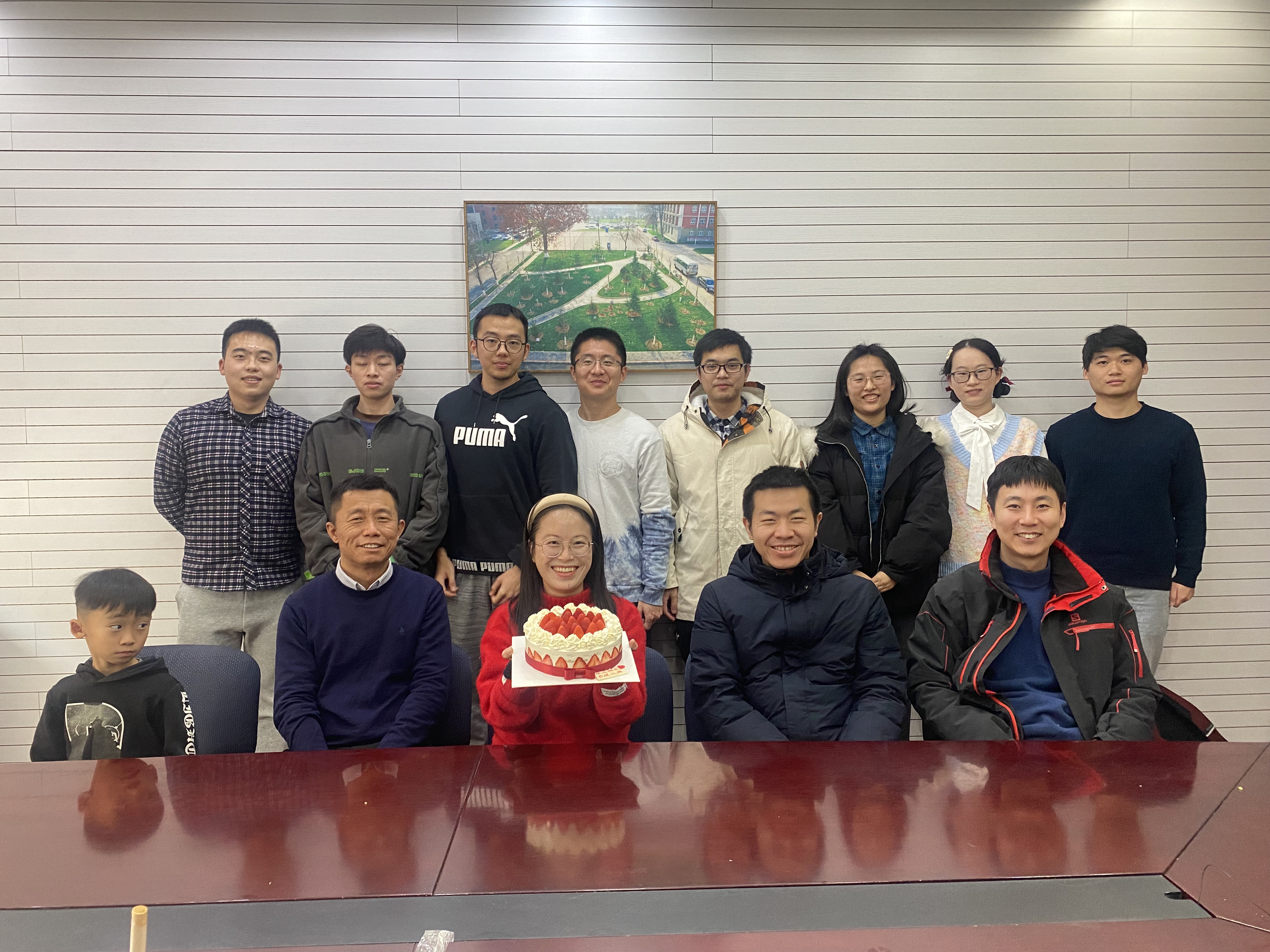

杨晓雷 (Xiaolei Yang),研究员 (Professor), 中国科学院力学研究所 (Institute of Mechanics, Chinese Academy of Sciences)
电子邮件 (Email): xyang@imech.ac.cn
ORCID: https://orcid.org/0000-0002-2606-0672; Google Scholar: https://scholar.google.com/citations?user=qiG-0OsAAAAJ&hl=en
教育背景 (Education Background)
2004-09~2010-07, 中国科学院大学 (University of Chinese Academy of Sciences), 理学博士 (Ph.D.)
2000-09~2004-07, 兰州大学 (Lanzhou University), 大学本科 (B.S.)
科学研究 (Research)
以大规模并行计算和机器学习方法为主要手段,我们关注可再生能源和人类健康等领域的流体力学问题。
Using massively parallel computing and machine learning as the key tools, we are concerned about fluid mechanics problems in the areas of renewable energy and human health.
1. 工程湍流的模型与计算方法 (Models and computational methods for tackling turbulent flows in engineering)
- 发展分离流的数据驱动大涡模拟壁模型 (Develop data-driven large-eddy simulaiton wall models for separated flows)

- 发展未解析流动的参数化模型 (Develop parameterized models for unresolved flows)

- 发展粗糙壁湍流的数据驱动粗糙度长度模型 (Develop data-driven roughness length model for rough-wall turbulence)

2. 风电场湍流物理 (Physics of wind farm turbulence)
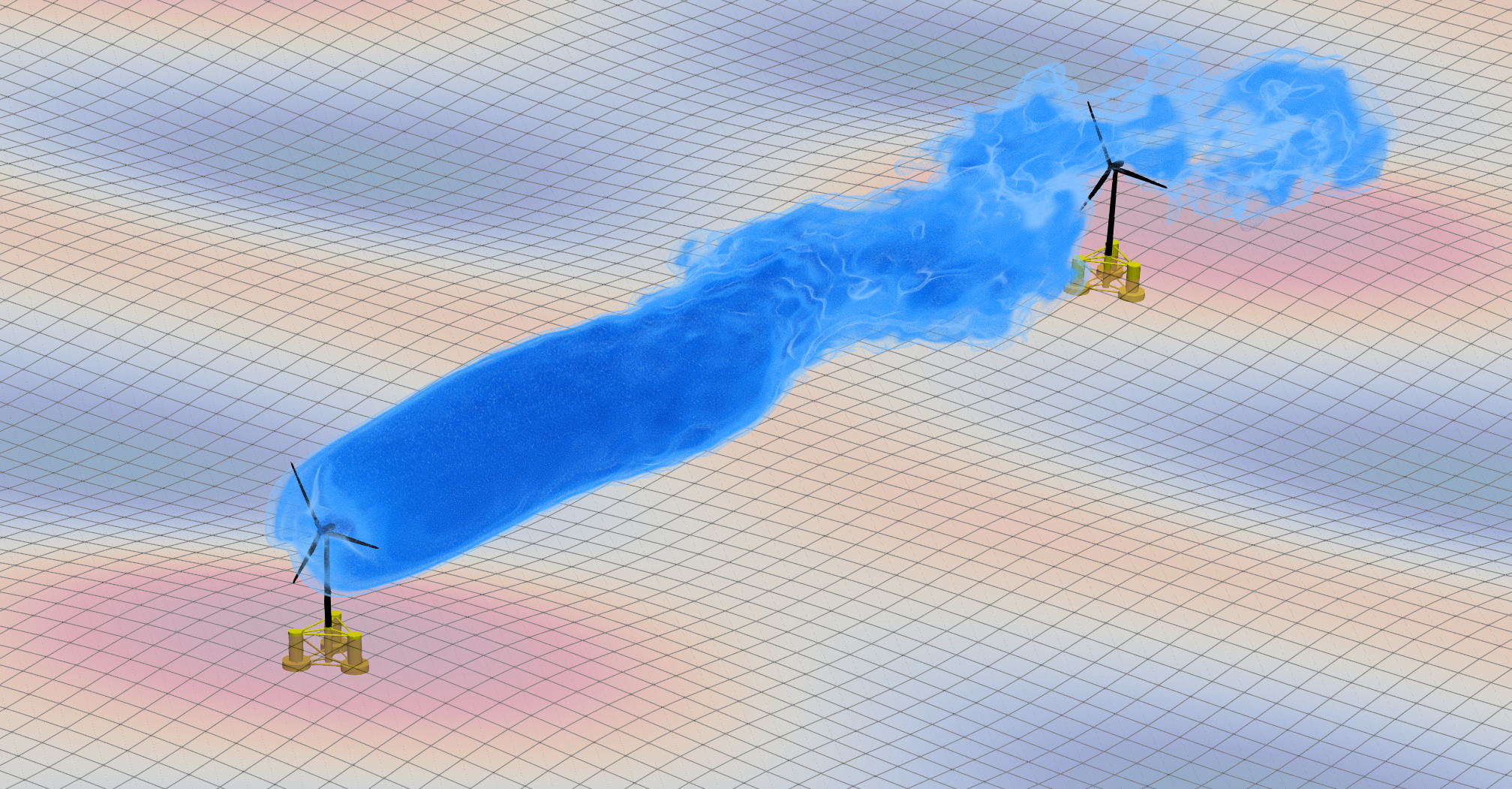
- 探索风力机尾迹大尺度湍流结构的生成与演化机理 (Uncover the onset and evolution mechanism of large-scale turbulent structures in wind turbine wakes)
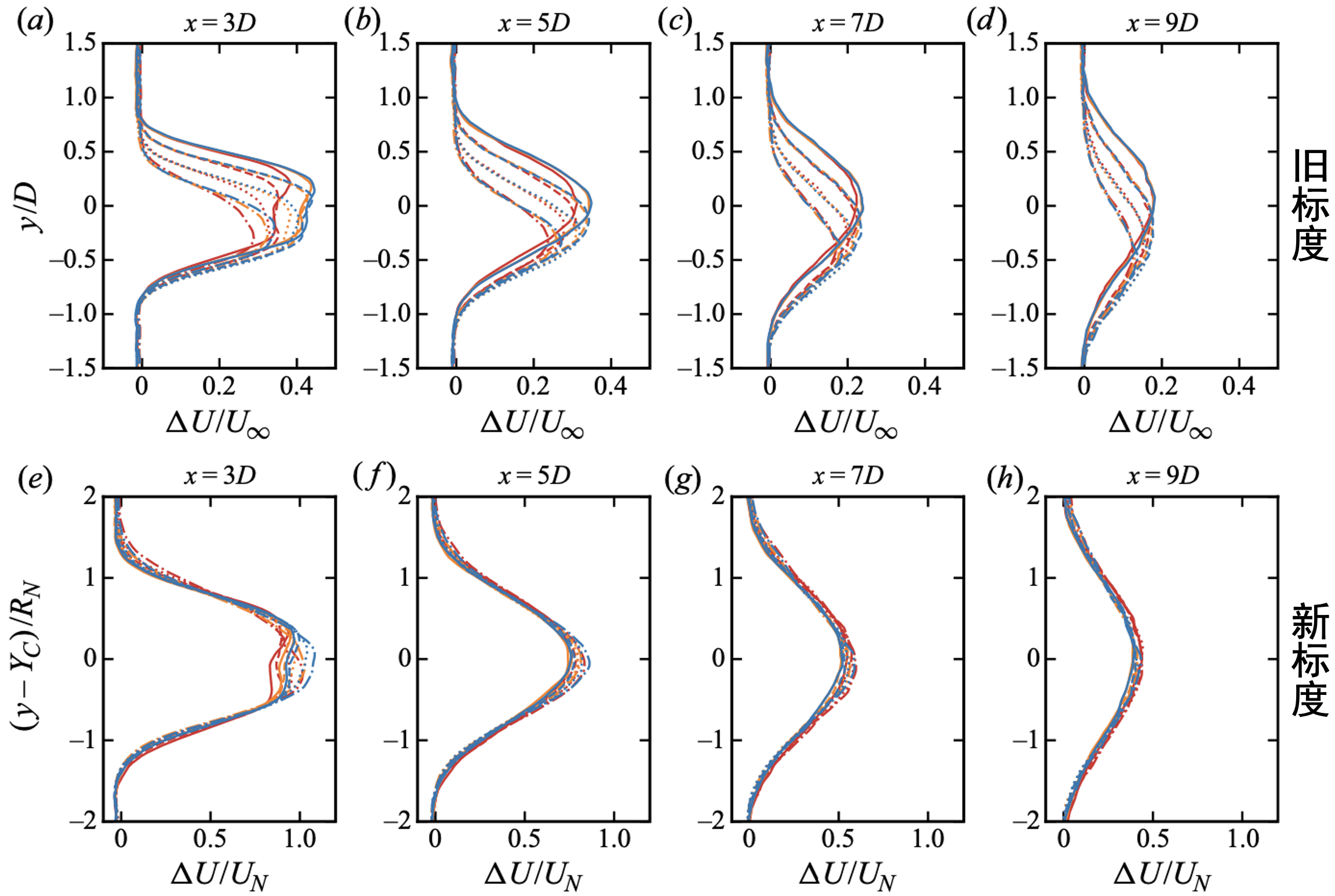
- 研究风力机尾迹的相似准则(Investigate the similarity scaling of wind turbine wakes)
3. 考虑风电场湍流的风能工程模型 (Engineering models for wind energy considering the effects of wind farm turbulence)
- 基于流动物理的风电场微观选址
- 基于人工智能的风力机协同控制
4. 人类健康中的流体力学问题 (Fluid mechanics in human health)
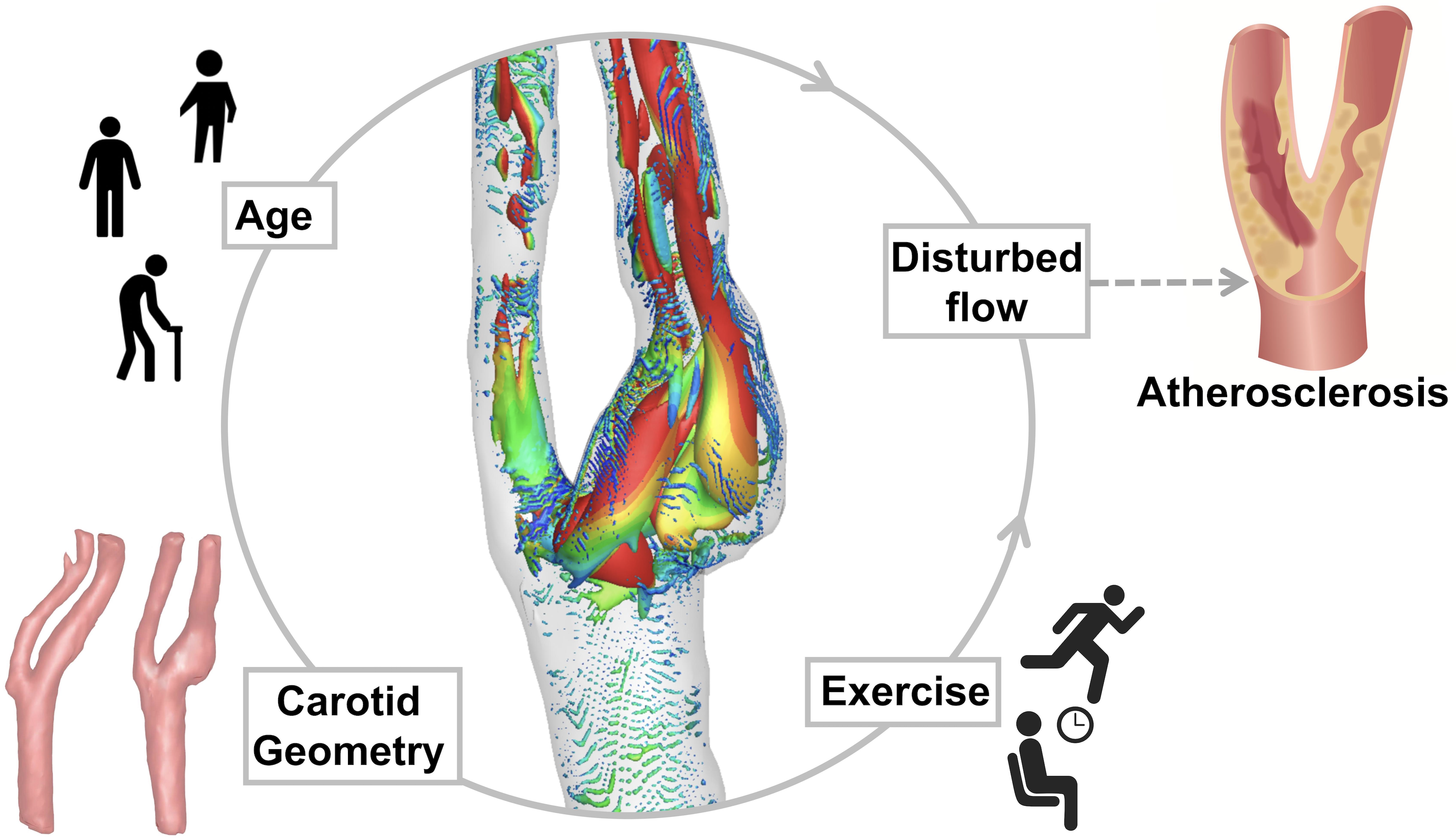
- 动脉粥样硬化中的流体力学机制
招生信息 (Admissions Information)
欢迎力学、计算数学、物理等相关专业学生报考!
Students of mechanics, computational mathematics, physics and other related majors are welcome to apply!
教授课程 (Teaching)
纽约州立大学石溪分校 (Stony Brook University)
1. MEC 102: Engineering Computing and Problem Solving, 2018, 2019 Spring
2. MEC 510: Object-Oriented Programming for Scientists and Engineers, 2016, 2017, 2018 Fall
3. MEC 524: Computational Methods for Fluid Mechanics and Heat Transfer, 2017 Spring
4. MEC 596: Projects in Mechanical Engineering, 2019 Spring
中国科学院大学 (University of Chinese Academy of Sciences)
1. 科学前沿进展名家系列讲座科学III,第357讲,风能中的流体力学问题,2022年9月15日
学术论文/论著 (Publications)
Journal Papers (∗ for corresponding author)
- Yan X, Zhou Z, Cheng X, & Yang* X. Time integration schemes based on neural networks for solving partial differential equations on coarse grids. Communications in Computational Physics, Accepted.
- Qin J, Liao F, Dong G, & Yang* X. Parallelization strategies for resolved simulations of fluid-structure-particle interactions. Applied Mathematics and Mechanics (English Edition), Accepted.
- Li Z, & Yang* X. Resolvent-based motion-to-wake modelling of wind turbine wakes under dynamic rotor motion. Journal of Fluid Mechanics, 2024, 980, A48.
- Rivera-Arreba I, Li Z, Yang* X, & Bachynski-polić* E E. Comparison of the dynamic wake meandering model againest large eddy simulation for horizontal and vertical steering of wind turbine wakes. Renewable Energy, 2024, 221, 109887.
- Wang Z, & Yang* X. Upward shift of wind turbine wakes in large wind farms. Energies, 2023, 16(24), 8051.
- Zhang F, Yang* X, & He G. Multiscale analysis of a very long wind turbine wake in an atmospheric boundary layer. Physical Review Fluids, 2023, 8, 104605.
- Wang Z, Dong G, Li Z, & Yang* X. Statistics of wind farm wakes for different layouts and ground roughness. Boundary-Layer Meteorology, 2023, 188, 285-320.
- Dong G, Qin J, Li Z, & Yang* X. Characteristics of wind turbine wakes for different blade designs. Journal of Fluid Mechanics, 2023, 965, A15.
- Zhou Z, Yang XIA X, Zhang F, & Yang* X. A wall model learned from the periodic hill data and the law of the wall. Physics of Fluids, 2023, 35, 055108.
- Zhang Y, Li Z, Liu X, Sotiropoulos F, & Yang* X. Turbulence in waked wind turbine wakes: similarity and empirical formulae. Renewable Energy, 2023, 209, 27-41.
- Li Y, Li Z, Zhou Z, & Yang* X. Large-eddy simulation of wind turbine wakes in forest terrain. Sustainability, 2023, 25(6), 5139.
- Khosronejad* A, Limaye A B, Zhang Z, Kang S, Yang X, & Sotiropoulos F. On the morphodynamics of a wide class of large-scale meandering rivers: Insights gained by coupling LES with sediment-dynamics. Journal of Advances in Modeling Earth Systems, 2023, 15, e2022MS003257.
- Santoni C, Khosronejad A*, Yang X, Seiler P, & Sotiropoulos F. Coupling turbulent flow with blade aeroelastics and control modules in large-eddy simulation of utility-scale wind turbines. Physics of Fluids, 2023, 35, 015140.
- Li S, Zhou Z, Chen D, Yuan X, Guo Q, & Yang* X. Effects of wall topology on statistics of cube-roughened wall turbulence. Boundary-Layer Meteorology, 2023, 186, 305-336.
- Zhou Z, Li Z, Yang* X, Wang S, & Xu D. Investigation of the wake characteristics of an underwater vehicle with and without a propeller. Ocean Engineering, 2022, 266, 113107.
- Li S, Yang* X, Yuan X, & Guo Q. Numerical Study on the Effect of Roughness Element Orientation on Turbulence Statistics. Acta Aerodynamica Sinica, 2022. (in Chinese)
- Li Z, Liu X, & Yang* X. Review of turbine parameterization models for large-eddy simulation of wind turbine wakes. Energies, 2022, 15, 6533. (Feature paper)
- Li S, Yang* X, & Lv Y. Predictive capability of the logarithmic law for roughness-modeled large-eddy simulation of turbulent channel flows with rough walls. Physics of Fluids, 2022, 34, 085112.
- Oaks W, Kang S, Yang X, & Khosronejad* A. Lagrangian dynamics of contaminant particles released from a point source in New York City. Physics of Fluids, 2022, 34, 073303.
- Li Z, Dong G, Qin J, Zhou Z, & Yang* X. Coherent flow structures in the wake of floating wind turbines induced by motions in different degrees of freedom. Acta Aerodynamica Sinica, 2022, 40(X), 1−9. (in Chinese)
- Liu X, Li Z, Yang* X, Xu D, Kang S, & Khosronejad A. Large eddy simulation of wakes of waked wind turbines. Energies, 2022, 15(8), 2899.
- Kang* S, Kim Y, Lee J, Khosronejad A, & Yang X. Wake interactions of two horizontal axis tidal turbines in tandem. Ocean Engineering, 2022, 254, 111331.
- Zhang F, Zhou Z, Zhang H, & Yang* X. A new single formula for the law of the wall and its application to wall-modeled large-eddy simulation. European Journal of Mechanics - B/Fluids, 2022, 94, 350-365.
- Chen D, Zhou Z, & Yang* X. A measure-correlate-predict model based on neural networks and frozen flow hypothesis for wind resource assessment. Physics of Fluids, 2022, 34, 045107.
- Zhou Z, Li B, Yang X, & Yang* Z. A robust super-resolution reconstruction model of turbulent flow data based on deep learning. Computers & Fluids, 2022, 239, 105382.
- Dong G, Qin J, Li Z, & Yang* X. An inverse method for wind turbine blade design with given distributions of load coefficients. Wind, 2022, 2, 175-191.
- Qin J, Yang* X, & Li Z. Hybrid diffuse and sharp interface immersed boundary methods for particulate flows in the presence of complex boundaries. Communications in Computational Physics, 2022, 31, 1242-1271.
- Dong G, Li Z, Qin J, & Yang* X. Predictive capability of actuator disk models for wakes of different wind turbine designs. Renewable Energy, 2022, 188, 269-281.
- Zhou Z, Li Z, He G, & Yang* X. Towards multi-fidelity simulation of flows around an underwater vehicle with appendages and propeller. Theoretical and Applied Mechanics Letters, 2022, 12, 100318.
- Dong G, Li Z, Qin J, & Yang* X. How far the wake of a wind farm can persist for? Theoretical and Applied Mechanics Letters, 2022, 12, 100313.
- He X, & Yang* X. Effects of exercise on flow characteristics in human carotids. Physics of Fluids, 2022, 34, 011909. (Featured article; Press Release; Reported by 10 News outlets including ScienMag, Bioengineer.org and Phys.org)
- Li Z, Dong G, & Yang* X. Onset of wake meandering for a floating offshore wind turbine under side-to-side motion. Journal of Fluid Mechanics, 2022, 934, A29.
- Lv Y, Huang X, Yang X, Yang* X.I.A, Wall-model integrated computational framework for large-eddy simulations of wall-bounded flows. Physics of Fluids, 2021, 33, 125120.
- Yang* X. Review of research on the simulation method and flow mechanism of a single horizontal-axis wind turbine wake. Chinese Journal of Theoretical and Applied Mechanics, 2021, 53(12): 3169-3178. (In Chinese)
- Zhou Z, Wu T, & Yang* X. Reynolds number effect on statistics of turbulent flows over periodic hills. Physics of Fluids, 2021, 33, 105124.
- Zhou Z, He G, & Yang* X. Wall model based on neural networks for LES of turbulent flows over periodic hills. Physical Review Fluids, 2021, 6(5), 054610.
- Kang* S, Khosronejad A, & Yang X. Turbulent flow characteristics around a non-submerged rectangular obstacle on the side of an open channel. Physics of Fluids, 2021, 33(4), 045106.
- Li Z, & Yang* X. Large-eddy simulation on the similarity between wakes of wind turbines with different yaw angles. Journal of Fluid Mechanics, 2021, 921, A11.
- Li Z, Zhang X, Wu T, Zhu L, Qin J, & Yang* X. Effects of slope and speed of escalator on the dispersion of cough-generated droplets from a passenger. Physics of Fluids, 2021, 33(4), 041701.
- Liao F, & Yang* X. On the capability of the curvilinear immersed boundary method in predicting near-wall turbulence of turbulent channel flows. Theoretical and Applied Mechanics Letters, 2021, 11(4), 100279.
- Li S, Yang* X, Jin G, & He G. Wall-resolved large-eddy simulation of turbulent channel flows with rough walls. Theoretical and Applied Mechanics Letters, 2021, 11(1), 100228.
- Yang X, Milliren C, Kistner M, Hogg C, Marr J, Shen L, & Sotiropoulos* F. High- fidelity simulations and field measurements for characterizing wind fields in a utility-scale wind farm. Applied Energy, 2021, 281, 116115.
- Khosronejad* A, Herb W, Sotiropoulos F, Kang S, & Yang X. Assessment of Parshall flumes for discharge measurement of open-channel flows: A comparative numerical and field case study. Measurement, 2021, 167, 108292.
- Wu C, Yang* X, & Zhu Y. On the design of potential turbine positions for physics-informed optimization of wind farm layout. Renewable Energy, 2021, 164, 1108–1120.
- Li Z, Wang H, Zhang X, Wu T, & Yang* X. Effects of space sizes on the dispersion of cough-generated droplets from a walking person. Physics of Fluids , 2020, 32(12), 121705. (Featured article; Press Release; Reported by 52 news outlets including Reuters and U.S. News.)
- Chen Y, Yang* X, Iskander AJ, & Wang P. On the flow characteristics in different carotid arteries. Physics of Fluids, 2020, 32(10), 101902. (Editor’s pick)
- Liao F, Yang* X, Wang S, & He G. Grid-dependence study for simulating propeller crashback using large-eddy simulation with immersed boundary method. Ocean Engineering, 2020, 218, 108211.
- Yang X, Foti D, Kelley C, Maniaci D, & Sotiropoulos* F. Wake statistics of different-scale wind turbines under turbulent boundary layer inflow. Energies, 2020, 13(11), 3004.
- Li Z, & Yang* X. Evaluation of actuator disk model relative to actuator surface model for predicting utility-scale wind turbine wakes. Energies, 2020, 13(14), 3574.
- Zhou Z, Wang S, Yang X, & Jin* G. A structural subgrid-scale model for the collision- related statistics of inertial particles in large-eddy simulations of isotropic turbulent flows. Physics of Fluids, 2020, 32(9), 095103.
- Liao F, Wang S, Yang* X, & He G. A simulation-based actuator surface parameterization for large-eddy simulation of propeller wakes. Ocean Engineering, 2020, 199, 107023.
- Iskander*, AJ, Naftalovich R, & Yang X. The carotid sinus acts as a mechanotransducer of shear oscillation rather than a baroreceptor. Medical Hypotheses, 2020, 134, 109441.
- Yang X, & Sotiropoulos, F. A review on the meandering of wind turbine wakes. Energies, 2019, 12(24), 4725.
- Foti D, Yang X, Shen L, & Sotiropoulos* F. Effect of wind turbine nacelle on turbine wake dynamics in large wind farms. Journal of Fluid Mechanics, 2019, 869, 1-26.
- Yang X, & Sotiropoulos* F. On the dispersion of contaminants released far upwind of a cubical building for different turbulent inflows. Building and Environment, 2019, 154, 324-335.
- Shi B, Yang X, Jin G, He G, & Wang* S. Wall-modeling for large-eddy simulation of flows around an axisymmetric body using the diffuse-interface immersed boundary method. Applied Mathematics and Mechanics, 2019, 40, 305-320.
- Yang X, & Sotiropoulos* F. Wake characteristics of a utility-scale wind turbine under coherent inflow structures and different operating conditions. Physical Review Fluids, 2019, 4(2), 024604.
- Yang X, Pakula M, & Sotiropoulos* F. Large-eddy simulation of a utility-scale wind farm in complex terrain. Applied Energy, 2018, 229, 767-777.
- Foti D, Yang X, Campagnolo F, Maniaci D, & Sotiropoulos*, F. Wake meandering of a model wind turbine operating in two different regimes. Physical Review Fluids, 2018, 3(5), 054607.
- Foti D, Yang X, & Sotiropoulos* F. Similarity of wake meandering for different wind turbine designs for different scales. Journal of Fluid Mechanics, 2018, 842, 5-25.
- Yang X, & Sotiropoulos* F. A new class of actuator surface models for wind turbines. Wind Energy, 2018, 21(5), 285-302.
- Yang X, Khosronejad A, & Sotiropoulos* F. Large-eddy simulation of a hydrokinetic turbine mounted on an erodible bed. Renewable Energy, 2017, 113, 1419-1433.
- Foti D, Yang X, Campagnolo F, Maniaci D, & Sotiropoulos*, F. On the use of spires for generating inflow conditions with energetic coherent structures in large eddy simulation. Journal of Turbulence, 2017, 18(7), 611-633.
- Chawdhary S, Hill C, Yang X, Guala M, Corren D, Colby J, & Sotiropoulos* F. Wake characteristics of a TriFrame of axial-flow hydrokinetic turbines. Renewable Energy, 2017, 109, 332-345.
- Foti D, Yang X, & Sotiropoulos* F. Uncertainty quantification of infinite aligned wind farm performance using non-intrusive polynomial chaos and a distributed roughness model. Wind Energy, 2017, 20(6), 945-958.
- Khosronejad A, Le T, DeWall P, Bartelt N, Woldeamlak S, Yang X, & Sotiropoulos* F. High-fidelity numerical modeling of the Upper Mississippi River under extreme flood condition. Advances in Water Resources, 2016, 98, 97-113.
- Foti D, Yang X, Guala M, & Sotiropoulos* F. Wake meandering statistics of a model wind turbine: Insights gained by large eddy simulations. Physical Review Fluids, 2016, 1(4), 044407.
- Yang X, Hong J, Barone M, & Sotiropoulos* F. Coherent dynamics in the rotor tip shear layer of utility-scale wind turbines. Journal of Fluid Mechanics, 2016, 804, 90-115.
- Yang X, & Sotiropoulos* F. Analytical model for predicting the performance of arbitrary size and layout wind farms. Wind Energy, 2016, 19(7), 1239-1248.
- Yang X, Howard KB, Guala M, & Sotiropoulos* F. Effects of a three-dimensional hill on the wake characteristics of a model wind turbine. Physics of Fluids, 2015, 27(2), 025103.
- Yang X, Sotiropoulos* F, Conzemius RJ, Wachtler JN, Strong MB. Large-eddy simulation of turbulent flow past wind turbines/farms: the Virtual Wind Simulator (VWiS). Wind Energy, 2015, 18(12), 2025-2045.
- Kang S, Yang X, & Sotiropoulos* F. On the onset of wake meandering for an axial flow turbine in a turbulent open channel flow. Journal of Fluid Mechanics, 2014, 744, 376-403.
- Sotiropoulos* F, & Yang X. Immersed boundary methods for simulating fluid-structure interaction. Progress in Aerospace Sciences, 2014, 65, 1-21. (Highly cited)
- Yang X, Kang S, & Sotiropoulos* F. Computational study and modeling of turbine spacing effects in infinite aligned wind farms. Physics of Fluids, 2012, 24(11), 115107.
- Yang X, He* G, & Zhang X. Large-eddy simulation of flows past a flapping airfoil using immersed boundary method. Science China Physics, Mechanics and Astronomy, 2010, 53(6), 1101-1108.
- Yang X, Zhang X, Li Z, & He* G. A smoothing technique for discrete delta functions with application to immersed boundary method in moving boundary simulations. Journal of Computational Physics, 2009, 228(20), 7821-7836.
- Yang X. Towards the development of a wake meandering model based on neural networks. In Journal of Physics: Conference Series (2020, Vol. 1618, No. 6, p. 062026). IOP Publishing.
- Yang X, & Sotiropoulos F. Coordinated turbine control through axial-induction factor: wake characteristics and wind farm power optimization. WindTech 2017, October 24-26, 2017, Boulder, Colorado, USA.
- Yang X, Khosronejad A, Chawdhary S, Calderer A, Angelidis D, Shen L, & Sotiropoulos F. Simulation-based approach for site-specific optimization of marine and hydrokinetic energy conversion systems. E-proceedings of the 36th IAHR World Congress, 28 June-3 July, 2015, The Hague, the Netherlands.
- Yang X, Boomsma A, Sotiropoulos F, Kelley C, Maniaci D, & Resor B. Effects of spanwise blade load distribution on wind turbine wake evolution. Proceedings of the AIAA SciTech 33rd Wind Energy Symposium. 2015, AIAA 2015-0492.
- Yang X, & Sotiropoulos F. LES investigation of infinite staggered wind-turbine arrays. In Journal of Physics: Conference Series (2014, Vol. 555, No. 1, p. 012109). IOP Publishing.
- Yang X, Annoni J, Seiler P, & Sotiropoulos F. Modeling the effect of control on the wake of a utility-scale turbine via large-eddy simulation. In Journal of Physics: Conference Series (2014, Vol. 524, No. 1, p. 012180). IOP Publishing.
- Yang X, Boomsma A, Barone M, & Sotiropoulos F. Wind turbine wake interactions at field scale: An LES study of the SWiFT facility. In Journal of Physics: Conference Series (2014, Vol. 524, No. 1, p. 012139). IOP Publishing.
- Yang X, Kang S, Khosronejad A, & Sotiropoulos F. Towards Simulation of Hydrokinetic Turbine Arrays with Sediment Transport in Natural Waterways. Proceedings of 2013 IAHR Congress. Tsinghua University Press, Beijing.
- Yang X, & Sotiropoulos F. On the predictive capabilities of LES-actuator disk model in simulating turbulence past wind turbines and farms. In American Control Conference (ACC), 2013 (pp. 2878-2883). IEEE.
- Yang X, Kang S, & Sotiropoulos F. Toward a simulation-based approach for optimizing MHK turbine arrays in natural waterways. In Proceedings of the 1st Marine Energy Technology Symposium. METS, 2013. April 10-11, 2013, Washington, D.C.
- Yang X, He G, & Zhang X. Towards large-eddy simulation of turbulent flows with complex geometric boundaries using immersed boundary method. In 48th AIAA aerospace sciences meeting including the new horizons forum and aerospace exposition (2010, AIAA-2010-708).
团队成员 (Group members)
研究生 (Graduate Students))
博士研究生 (Ph.D. Students)
李世隆 (Shilong Li),2018-, 与何国威研究员、晋国栋研究员合作指导 (co-supervising with Prof. Guowei He and Prof. Guodong Jin),粗糙壁湍流 (Rough wall turbulence)
陈丹阳 (Danyang Chen),2020 (2022 转博)-, 复杂地形风力机尾迹湍流 (Turbulence of wind turbine wakes in complex terrain)
刘晓豪 (Xiaohao Liu),2020 (2022 转博)-, 风力机尾迹的数据驱动模型与智能控制 (Data-driven models and smart control of wind turbine wakes)
李韫良 (Yunliang Li), 2021 (2023 转博)-, 森林树冠上的风力机尾迹湍流机理 (Mechanism of wind turbine wake turbulence over forest canopies)
张风顺 (Fengshun Zhang),2021 (2023 转博)-, 与何国威研究员合作指导 (with Professor Guowei He),湍流的壁面模化大涡模拟方法与多尺度分析理论 (Wall modeled large-eddy simulation and multi-scale analysis theory for turbulent flows)
硕士研究生 (Master Students)
王泽伟 (Zewei Wang), 2021-, 大型风电场尾迹的机理与模型 (Mechanism and models for wakes of large-scale wind farms)
阎信辛 (Xinxin Yan), 2022-, 基于数据与知识的偏微分方程数值求解 (Solving PDE based on data and knowledge)
张奕 (Yi Zhang), 2022-, 湍流边界层与风电场理论(Turbulent boundary layer and wind plant theory)
已毕业博士研究生(Graduated Students)
董国丹 (Guodan Dong),2020-2023,论文(thesis):风力机叶片气动设计与尾迹机理研究 (Investigation of aerodynamic design of wind turbine blades and mechanism of wind turbine wakes),现任职于河海大学(Now faculty at Hohai University)
特别研究助理/博士后 (Special Research Assistant/Postdoc)
在站博士后/特别研究助理 (Current postdocs)
周志登 (Zhideng Zhou), 2020/01-,非平衡湍流的大涡模拟壁模型和机器学习 (Non-equilibrium large-eddy simulation wall models and machine learning)
出站博士后/特别研究助理 (Previous postdocs)
廖飞, 2019/09-2020/09,与何国威研究员合作指导 (with Professor Guowei He),螺旋桨水动力学方向 (Hydrodynamics of marine propeller),现任职于西北工业大学 (now at Northwestern Polytechnical University)
李曌斌 (Zhaobin Li), 2019/10-2023/09,海上风电中的湍流问题 (Turbulent flow problems in offshore wind energy),现任职于中国科学院力学研究所 (now at Institute of Mechanics, CAS)
秦建华 (Jianhua Qin), 2020/11-2022/11,颗粒解析的颗粒两相流计算方法及其应用 (Computational method for particle-reolsved particulate flows and its applications),现任职于南京理工大学 (now at Nanjing University of Science and Technology)
本科生 (Undergraduate Students)
陈与 (Yu Chen), 2020, 本科毕业论文 (Bachelors dissertation),兰州大学 (Lanzhou University),“颈动脉血液流动的流场分析”,related work published on Physics of Fluids (Editor's pick)
寿泽冰 (Zebing, Shou), 2020, 本科毕业论文 (Bachelors dissertation),中国科学院大学 (University of Chinese Academy of Sciences),“不同形状钝体尾迹的数值模拟和POD模态分析”
吴楚畋 (Chutian, Wu), 2020, 本科毕业论文 (Bachelors dissertation),华中科技大学 (Huazhong University of Science and Technology),“风机尾迹湍流与位置优化”,related work published on Renewable Energy
张风顺 (Fengshun Zhang), 2021, 本科毕业论文 (Bachelors dissertation),兰州大学 (Lanzhou University),“槽道湍流大涡模拟壁模型的机器学习研究”,related work published on European Journal of Mechanics - B/Fluids
阎信辛 (Xinxin Yan), 2022, 本科毕业论文 (Bachelors dissertation),长安大学 (Chang'an University),“数据驱动的一维模型方程离散方法”
张奕 (Yi Zhang), 2022, 本科毕业论文 (Bachelors dissertation),兰州大学 (Lanzhou University),“风电场中风力机尾迹的相似性”,related work published on Renewable Energy
2021年9月10日
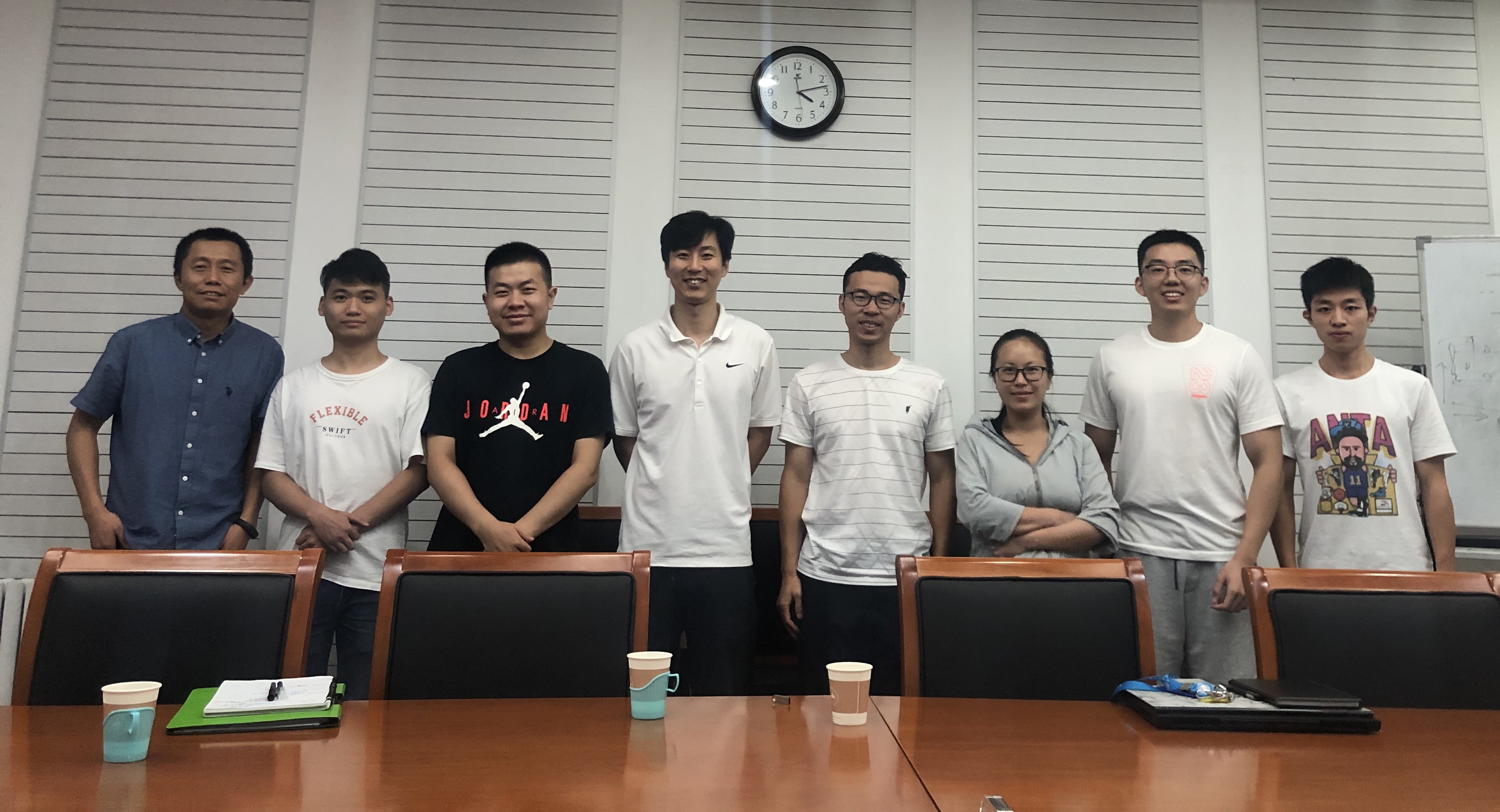
2023年11月24日:祝贺董国丹博士毕业!